
Smoke Without Borders
Indonesia's fires are again clouding Southeast Asian skies. The harder question is why a problem the region understands so well remains so difficult to prevent.
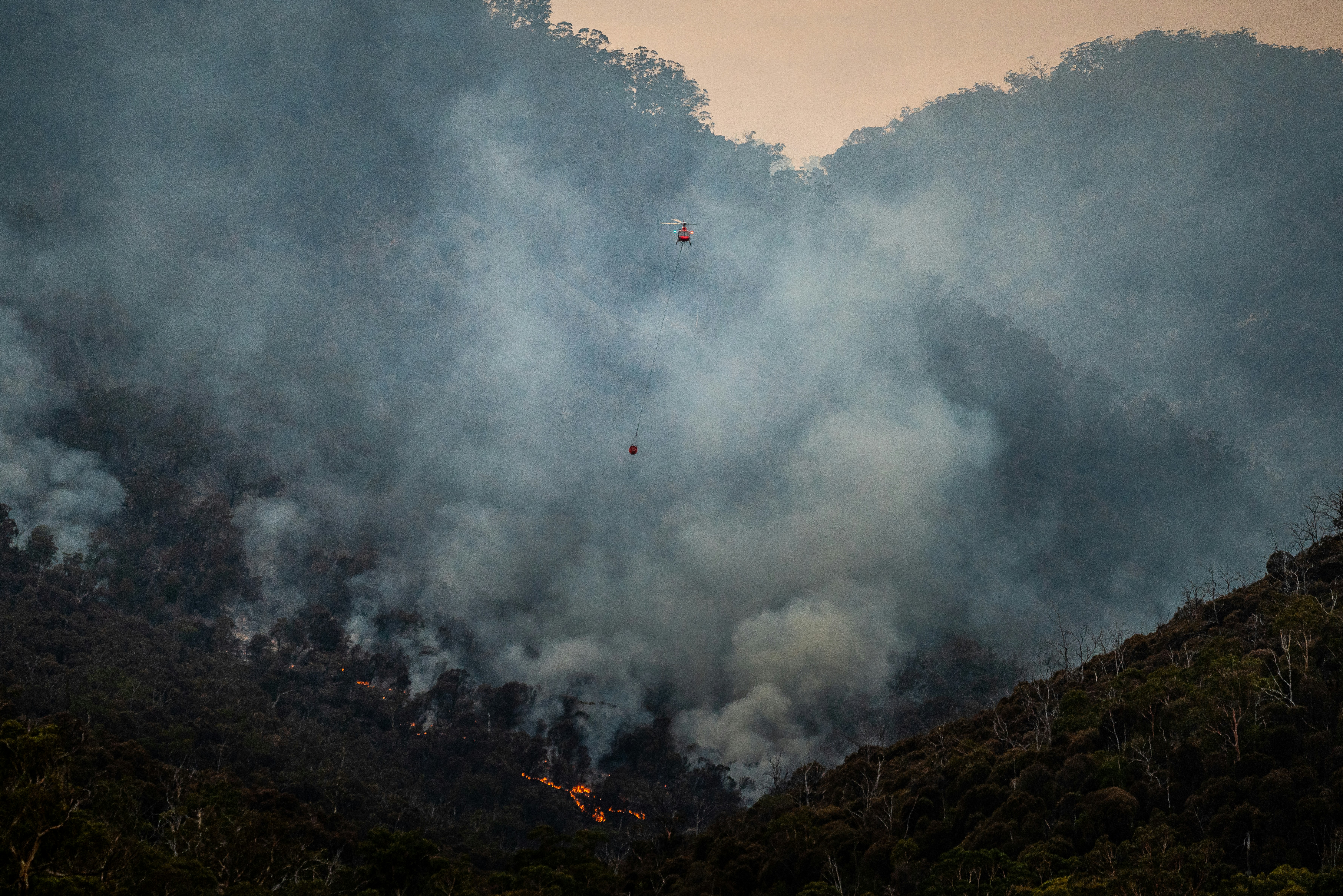
For several days in early September, breathing became hazardous in parts of Malaysian Borneo. In Serian, a district in Sarawak, the Air Pollution Index reached 519 on September 4, prompting Malaysia to declare a local emergency. Across the border, fires were burning through parts of Indonesian Kalimantan. ASEAN's meteorological centre had already placed southern ASEAN at its highest haze-alert level after detecting widespread smoke over Kalimantan and Sumatra, with transboundary haze drifting northward from West Kalimantan. Smoke, unlike diplomacy, has little interest in national sovereignty.
Yet describing the episode simply as Indonesia exporting pollution to its neighbours misses an important part of the story. Indonesians are among its first victims. By September 2, around 1.4m students across six provinces had moved to remote learning because of poor air quality. Thousands of personnel and dozens of aircraft have been mobilised to contain the fires, with Japan sending additional helicopters and personnel to assist operations in West Kalimantan. Indonesia is therefore not merely the territory from which much of the present haze originates. It is also paying heavily for it.
The immediate explanation is unusually hostile weather. A strong El Niño has brought hotter and drier conditions, making vegetation and peat easier to burn. But El Niño does not provide the match. Indonesian authorities describe it instead as a catalyst: human activity remains an important source of ignition, while extreme dryness allows fires to spread more quickly. Agricultural burning, land clearing and fires spreading across degraded landscapes can all contribute. Peatlands make the problem particularly stubborn. Once drained, their water tables fall and formerly waterlogged organic material becomes combustible, allowing fire to smoulder underground long after flames at the surface appear to have disappeared.
This makes haze as much a problem of political economy as meteorology. Fire is a cheap way to clear land, but the forces behind it can involve land transactions, agricultural development, local intermediaries, disputed ownership and different levels of enforcement. Responsibility is therefore not always captured neatly by labels such as "corporation" or "smallholder." Sharon Seah, a researcher at Singapore’s ISEAS–Yusof Ishak Institute, describes it more broadly: “This is a governance problem in which many interests overlap.” She points to development priorities, decentralised permitting, political-economic relationships and ambiguous land-use classifications among the complications surrounding enforcement.
The costs, however, are anything but local. Fine particles from vegetation and peat fires can travel hundreds of kilometres with prevailing winds, turning a land-management problem into a regional public-health issue. Malaysia and Singapore may receive much international attention when haze crosses borders, but communities in Sumatra and Kalimantan often endure the same pollution at much closer range. The economic losses can also be enormous. During the catastrophic fires of 2015, the World Bank estimated Indonesia's losses at about $16.1bn as schools closed, transport was disrupted and agriculture, commerce and public health suffered. What may make economic sense to an individual actor can impose costs far beyond the land on which a fire begins.
Southeast Asia has not ignored the problem. The ten ASEAN states signed the Agreement on Transboundary Haze Pollution in 2002, and it entered into force the following year. Indonesia completed its ratification in 2015. Since then the region has developed better satellite monitoring, hotspot detection, information-sharing and emergency coordination. Indonesia has also expanded peatland restoration, law enforcement and aerial firefighting. The current crisis has nevertheless reopened an older argument over whether cooperation is enough. Malaysian Prime Minister Anwar Ibrahim said on September 8 that "there is room for improvement" in ASEAN's mechanisms, while also cautioning that the causes of fires should be properly investigated before accusations are made. He added that Malaysia would not defend Malaysian companies if investigations in Indonesia established wrongdoing.
Indonesia, unsurprisingly, stresses another part of the equation. Berton Pandjaitan of the country's disaster-management agency has urged neighbouring states to rely on meteorological and satellite evidence when assessing the source of haze and argued that "our approach is not about blaming one another". Jakarta says it is deploying ground crews, aircraft, water bombing, weather modification and law enforcement while continuing to report hotspot and haze-trajectory information through ASEAN mechanisms. The two positions are not necessarily contradictory. One stresses accountability and stronger regional mechanisms; the other stresses evidence, domestic action and cooperation without premature attribution.
The disagreement also exposes a structural question for ASEAN. The organisation can identify hotspots and estimate where their smoke will travel with increasing precision. What it cannot do nearly as easily is regulate land use or prosecute actors inside one of its member states. The haze agreement was constructed around cooperation, sovereignty and consensus rather than supranational enforcement. Seah argues that blaming the agreement alone misses this design: it was created to encourage cooperation without overriding national sovereignty. Stronger cross-border accountability might therefore make regional action more effective, but it would also ask ASEAN governments to reconsider principles they have traditionally guarded closely.
Indonesia's record, meanwhile, is more complicated than the periodic headlines might suggest. After the disastrous 2015 season, Jakarta placed greater emphasis on prevention, peatland restoration and sanctions against companies. Monitoring has improved and firefighting capacity has expanded; these measures may have helped contain the scale of fires in subsequent years. Yet the current episode shows how severe drought can test those improvements.
The haze problem is therefore no longer mainly a mystery of where the smoke comes from. Satellites can increasingly answer that question. The harder issue is what should happen once the source is known. Should responsibility rest mainly with the country where fires originate, or with the companies and individuals directly responsible for them? And after more than two decades of regional cooperation, what should Southeast Asia now consider meaningful progress: better management of each crisis, or making severe transboundary haze a rarity altogether?