
When Access Becomes a Tool of Power
Trump made it clear who has control over what is being put out into the media.
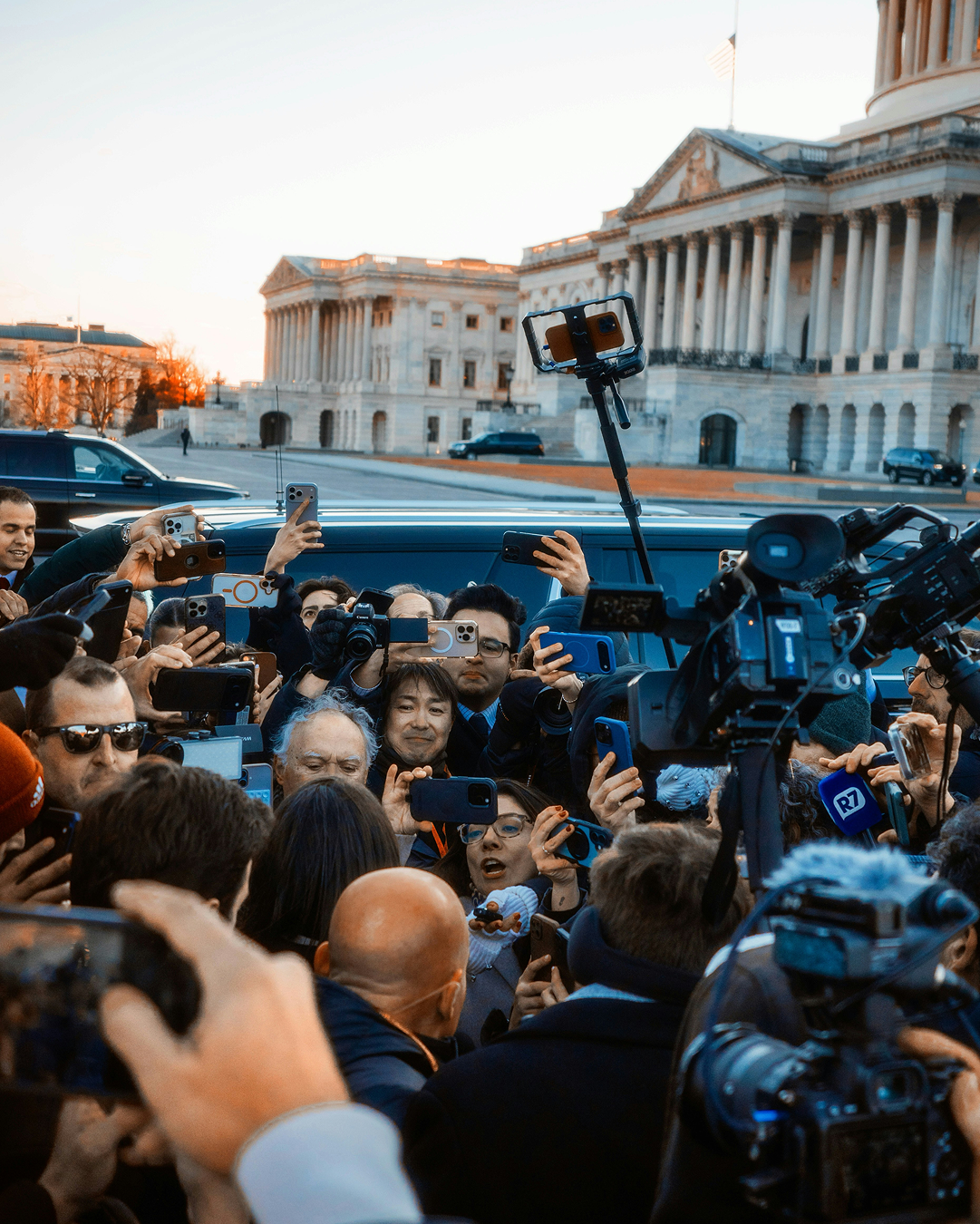
On September 18, Trump announced that CNN, MS NOW and Politico would be barred from the White House, accusing the organisations of repeatedly publishing what he described as “fiction, lies, and fake news” The following day, journalists from the three outlets were denied access to the White House grounds and had their press credentials confiscated. On September 21, the organisations filed a lawsuit in federal court in Washington, D.C., arguing that the administration had violated their First Amendment rights and denied them due process under the Fifth Amendment.
The dispute might have remained another episode in Trump's long-running conflict with the American media. Instead, it disrupted one of the less visible pieces of infrastructure behind presidential coverage: the television press pool.
Five networks, ABC, CBS, CNN, Fox News and NBC, normally rotate responsibility for filming presidential events and distributing the footage to other news organisations. The system allows broadcasters to share the considerable costs and logistical difficulties of following the president, particularly when space or security restrictions make it impractical for every organisation to send its own camera crew. September 21 was supposed to be CNN's turn. After CNN was excluded from the White House, the other four networks declined to replace it, effectively suspending pooled television coverage of the president.
The significance was immediately visible. During one presidential event that day, viewers could see Trump but could not receive the usual pooled audio. The arrangement did not prevent journalists from reporting on the president altogether: print, radio and wire-service reporters continued covering his activities, and individual outlets could still obtain their own footage. But the breakdown demonstrated how a decision aimed at several newsrooms could affect the wider flow of information about the presidency.
That is what makes the episode more consequential than a familiar quarrel between Trump and outlets he considers hostile. The immediate question is whether three organisations should have access to the White House. The broader question is whether the government can decide who receives that access based on disagreement with the way those organisations report on it.
The White House has offered a straightforward answer: access to the presidential workplace is a privilege, not an unconditional right. Its defence is that the administration is not preventing CNN, MS NOW or Politico from publishing stories, the organisations can continue reporting from outside the White House. Trump has also argued that the restrictions are directed not at the free press itself but at what he characterises as “fake news” that poses a threat to the country.
Yet that explanation leaves a difficult constitutional question unresolved. Government control over access does not necessarily give officials unlimited discretion over whom to exclude. The legal dispute turns partly on whether the administration's decision was an ordinary exercise of control over a limited-access environment or whether it was retaliation for protected journalism.
That distinction matters because Trump has himself connected the restrictions to the outlets' reporting. The three organisations' lawsuit argues that the president's statements make the motive unusually explicit: they were excluded because the administration objected to their coverage. Also, several legal experts viewed this as potentially problematic under the First Amendment, which places limits on government discrimination based on viewpoint. The experts also pointed to Fifth Amendment concerns surrounding the removal of journalists' access without clear standards or an opportunity to challenge the decision.
The administration's position is not without a legal argument. The White House has broad authority over security and access inside the presidential complex, and not every journalist is entitled to unrestricted access to every presidential event. Courts have also recognised that the government may impose practical limits when space, security or logistics require them. The harder issue is what happens when those restrictions appear to be linked not to space or security, but to the content of a news organisation's reporting. Reuters' legal analysis notes that previous court decisions have drawn a distinction between legitimate access restrictions and government action that punishes journalists for their viewpoint.
The distinction is particularly important because the White House press corps does not merely provide publicity for the president. It performs an oversight function. Reporters question officials, scrutinise statements and provide information that citizens cannot easily obtain for themselves. Restricting access therefore has consequences beyond the affected organisations. It can alter the information environment in which the public evaluates government actions.
That does not mean every restriction on the press constitutes censorship, nor does it mean every criticism of a news organisation is illegitimate. News organisations are themselves institutions with editorial choices, commercial interests and political audiences. Governments are entitled to challenge inaccurate reporting, demand corrections and dispute journalistic claims. The unresolved issue is narrower: whether disagreement with journalism can legitimately become a basis for controlling journalists' physical access to government.
The reaction from Fox News is particularly revealing because it complicates any simple partisan reading of the confrontation. Fox, alongside ABC, CBS, NBC and CNN, joined the decision to suspend the television pool. In a joint statement, the five networks said that the public has a vital interest in receiving accurate and independent information about its government and that an administration should not restrict a news organisation because it objects to its reporting.
The response therefore crossed an important boundary. This was no longer simply CNN, MS NOW and Politico defending their own access. It became a dispute over the rules governing the relationship between the presidency and the press as an institution.
The administration's decision also created a practical paradox. By attempting to remove selected organisations from presidential coverage, it exposed how dependent the broader media ecosystem is on shared access arrangements. CNN's exclusion did not simply affect CNN. Because the network was part of the rotating television pool, removing it created a gap that the other networks chose not to fill. The effort to narrow access consequently disrupted a system designed precisely to ensure broad access to presidential events.
There is also a longer institutional history behind the confrontation. Trump has previously fought with journalists over access to the White House, including CNN correspondent Jim Acosta during his first administration. Courts intervened in that dispute after the White House revoked Acosta's press credentials. The current case therefore arrives with legal precedents already shaping the boundaries of presidential control over press access.
For now, neither side has the final word. CNN, MS NOW and Politico are asking the federal court to restore their access while the broader constitutional case proceeds. The administration maintains that it has authority to determine who receives access to the White House. Legal experts cited by Reuters, however, have questioned whether that authority extends to excluding organisations because of their reporting.
Trump has since suggested that he would probably allow the organisations back if a court rules against the administration. That possibility underscores the extent to which the dispute has moved beyond a disagreement between a president and particular newsrooms. The immediate legal question may be resolved by a court, but the institutional question will remain: how much discretion should a government have over the journalists who are allowed close enough to scrutinise it?
The answer matters not because journalists are entitled to favourable treatment, but because the opposite principle carries its own risk. If access to public officials becomes dependent on whether coverage is sufficiently agreeable to those officials, the boundary between managing access and managing scrutiny becomes increasingly difficult to draw.